9HTTP



 5 min read


USA proxy services forward requests through US IP addresses, helping businesses check regional website content, verify advertising placements, and conduct authorized market research.
When choosing a provider, consider not only the advertised number of IPs but also location availability, session settings, minimum purchase requirements, and trial conditions. These factors determine whether a product fits a specific project.
This article introduces the features, pricing, pros, and cons of major USA proxy providers, helping you compare different options, find a suitable service for your needs, and explore USA proxy services worth considering in 2025.
Ⅰ. What Is a USA Proxy?
A USA proxy forwards requests through a US IP address, allowing websites to see the proxy’s exit IP rather than your original IP. Businesses can use it for authorized market research, regional website testing, advertising verification, and local SEO monitoring.
USA proxies include residential, ISP, datacenter, and mobile proxies. They can provide rotating IPs or sessions that retain the same IP. Website content may also be affected by language, cookies, account settings, and device location.
Ⅱ. How Does a USA Proxy Work?
- Configure the connection: Enter the provider’s proxy address, port, and authentication details in your browser or application.
- Select a US location: Choose the United States or a specific state or city supported by the product.
- Send a request: The proxy forwards your request to the destination website using a US exit IP.
- Receive the response: The website sends its response to the proxy, which then returns it to your application.
- Manage the session: Rotate IPs or retain the same address according to your settings and the provider’s session limits.
Ⅲ. What Should You Clarify Before Choosing USA Proxies?
Start by answering three questions:
- Location requirements: Is a US exit IP sufficient, or do you need a specific state or city?
- Session requirements: Can the IP change between requests, or does it need to remain consistent?
- Cost requirements: Which purchase volume and billing model match your expected traffic?
Rotating residential proxies can be used for regional sampling and independent requests. When a persistent exit IP is required, static ISP proxies can be evaluated. Mobile and datacenter proxies provide additional network options.
A US IP is only one localization signal. Language, cookies, account settings, and device location can also affect page content.
Ⅳ. Six Leading USA Proxy Providers
9HTTP
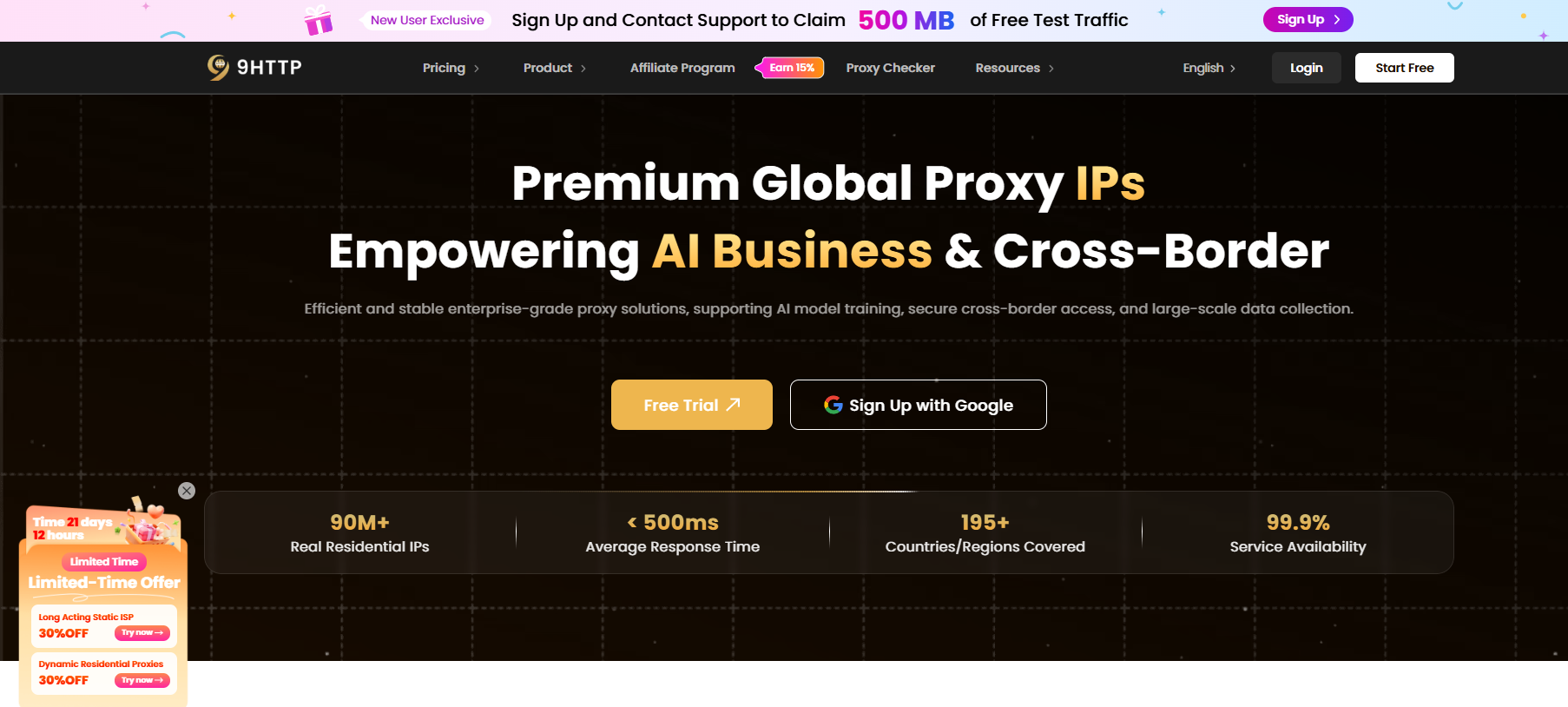
9HTTP provides US resources within a global network covering 195+ countries and regions with 90M+ residential IPs. Its Dynamic Residential Proxies and Long Acting Static ISP products can be used by businesses for authorized public data collection, SEO monitoring, advertising verification, and regional website testing.
- Supports rotating connections and sticky sessions for independent requests and connected workflows.
- Provides geographic targeting options, subject to the resources available within the selected product.
- Residential and static ISP products accommodate different exit IP persistence requirements.
- Offers traffic-based and unmetered residential plans.
Proxy types: Dynamic Residential Proxies, Long Acting Static ISP, and unlimited residential proxies with bandwidth-based and port-based plans.
Free trial: 500 MB of rotating residential proxy traffic.
Residential pricing: From $0.22/GB.
Get started with 9HTTP USA proxy options.
Thordata
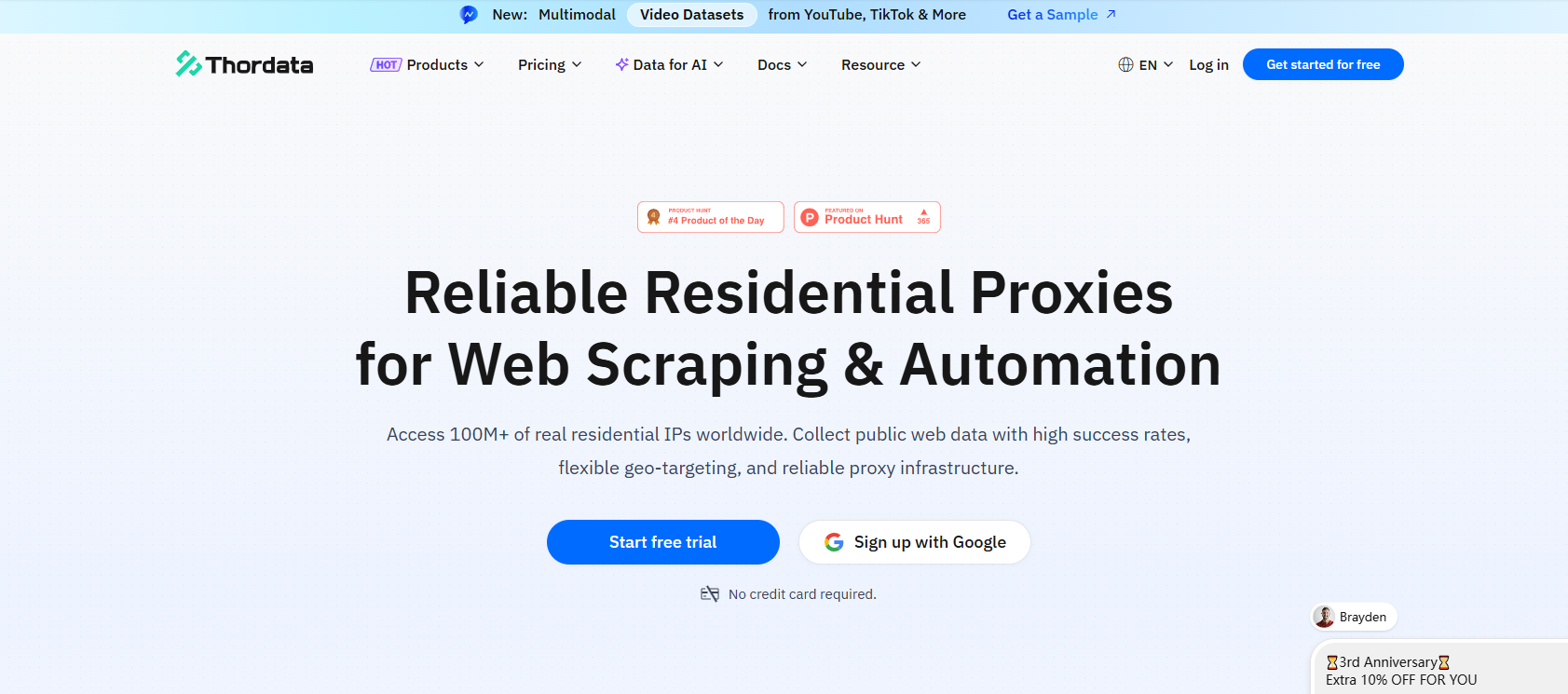
- IP resources: A proxy pool of 100M+ IPs, covering 190+ countries and cities.
- Cities: Supports city-level targeting, including New York, Los Angeles, and Chicago.
- Proxy types: Residential, datacenter, static ISP, and mobile proxies.
- Residential pricing: From $0.65/GB.
- Free trial: Yes.
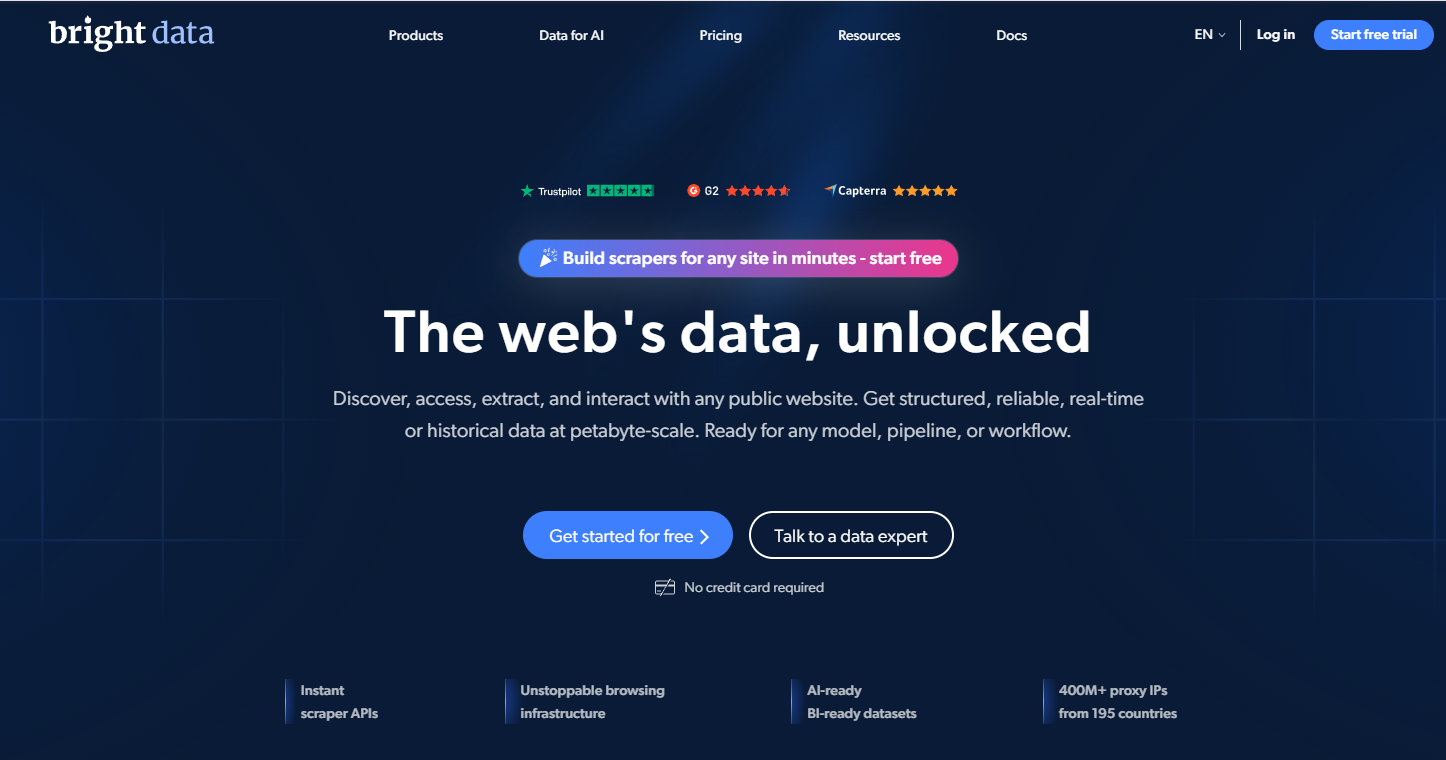
Bright Data
- IP resources: 400M+ residential proxy IPs, covering 195 countries and regions.
- Cities: Provides city and ZIP-code targeting options.
- Proxy types: Residential, datacenter, ISP, and mobile proxies.
- Residential pricing: Promotional pricing from $2.50/GB.
- Free trial: Yes.
Pros: A broad range of proxy and data products, detailed geographic targeting, and business purchasing options.
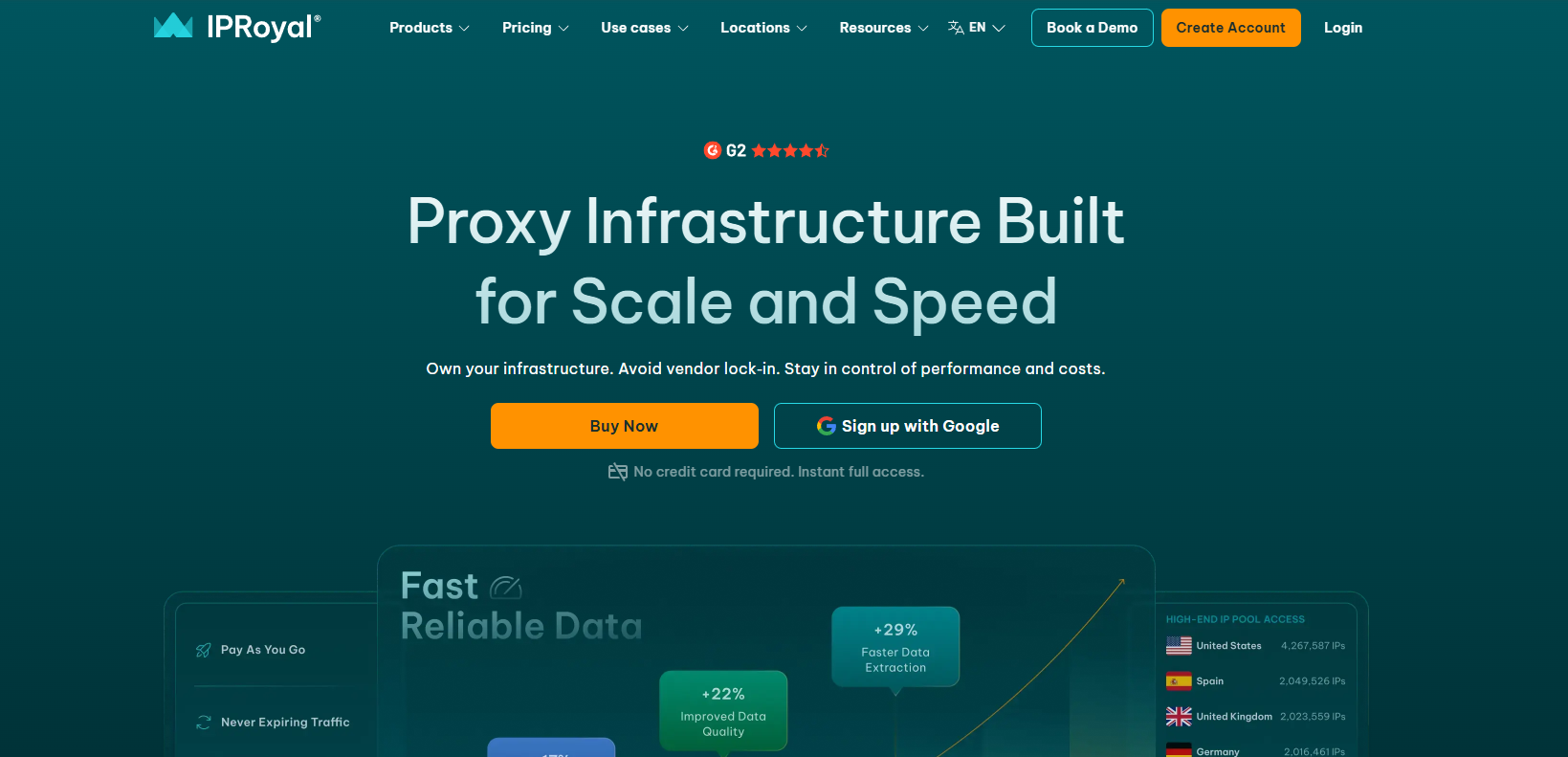
IPRoyal
- IP resources: 68M+ residential IPs, covering 195+ countries and regions.
- Cities: Residential proxies support city and state targeting; specific city availability needs to be confirmed.
- Proxy types: Residential, datacenter, ISP, and mobile proxies.
- Residential pricing: From $1.75/GB.
- Free trial: For businesses only.
Pros: Purchased residential traffic does not expire. Supports rotating and sticky sessions, with subscription or pay-as-you-go purchasing options.
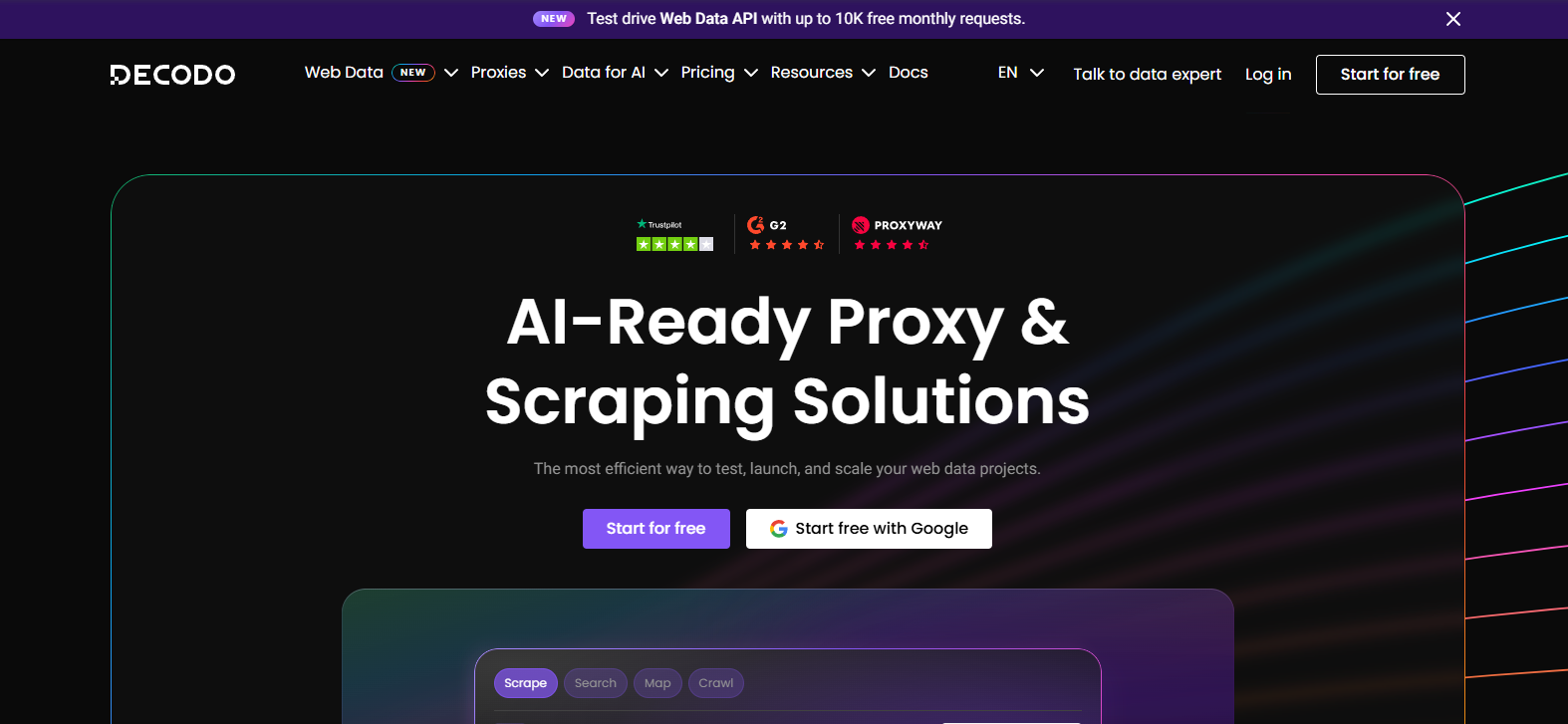
Decodo
- IP resources: 125M+ residential IPs, covering 195+ countries and regions.
- Cities: Covers major US cities and provides state and city targeting.
- Proxy types: Residential, datacenter, ISP, and mobile proxies.
- Residential pricing: From $1.50/GB.
- Free trial: Yes.
Pros: Multiple proxy types, geographic targeting, and flexible purchasing options.
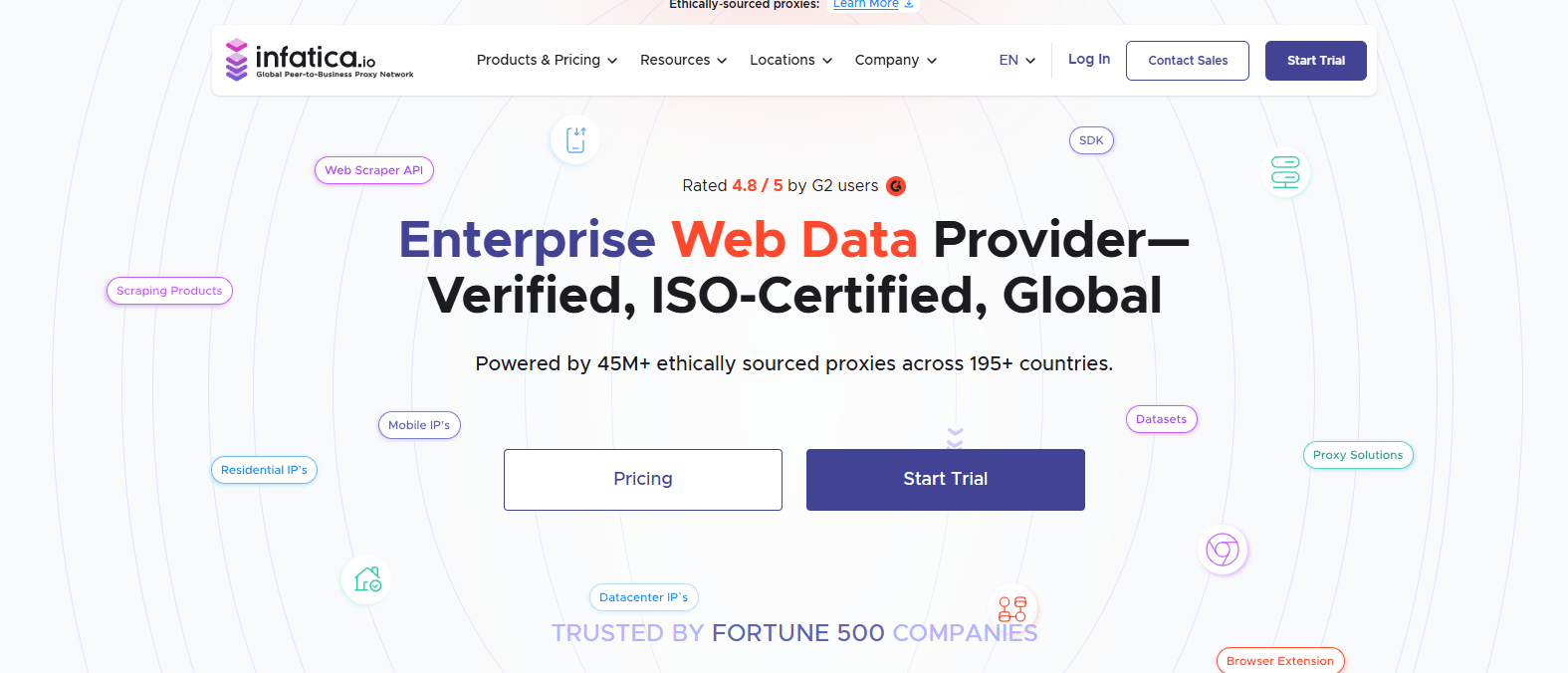
Infatica
- IP resources: 40M+ residential IPs, covering 195+ countries and regions.
- Cities: Lists locations including New York, Los Angeles, Boston, Houston, and Miami.
- Proxy types: Residential, datacenter, ISP, and mobile proxies.
- Residential pricing: From $2.60/GB.
- Free trial: $4 paid trial.
Pros: Supports residential rotation and geographic settings, with pay-as-you-go and volume plans.
Ⅴ. USA Proxy Provider Comparison Table
The IP resources column distinguishes US resources from global networks. The following figures are advertised on official websites and do not represent simultaneous online capacity.
| Provider | IP Resources | Global Country and Region Coverage | Free Trial | Rotating Residential Pricing |
|---|---|---|---|---|
| 9HTTP | 90M+ global residential IPs | 195+ | 500 MB of free rotating residential proxy trial traffic | From $0.22/GB |
| Thordata | 100M+ IPs | 190+ | ✓ | From $0.65/GB |
| Bright Data | 400M+ IPs | 195 | ✓ | Promotional pricing from $2.50/GB |
| IPRoyal | 68M+ IPs | 195+ | For businesses only | From $1.75/GB |
| Decodo | 125M+ IPs | 195+ | ✓ | From $1.50/GB |
| Infatica | 40M+ IPs | 195+ | $4 paid trial | From $2.60/GB |
This article is published by 9HTTP and draws on publicly available information from each provider. It is intended as a reference for comparing services. Providers report their own IP counts, and actual availability varies by location and plan. Advertised starting prices may depend on purchase volume or promotional eligibility. Refer to each provider’s current listings and order terms for pricing, coverage, and trial details. This comparison does not include independent performance testing. The order of providers does not indicate a ranking.
Ⅵ. Compliant USA Proxy Use Cases
The following are example workflows rather than measured customer case studies. Each assumes appropriate authorization and adherence to the applicable access terms.
Regional Website Testing
An ecommerce business needs to check the page experience of its own US storefront in different locations.
The team can use US locations supported by the product to check currency, shipping messages, promotional content, and page loading. Sessions that retain an exit IP can be evaluated for connected browsing flows.
Testing should use company-owned pages, test accounts, and a checkout test environment. Record the exit location, time, and screenshots, and avoid creating real orders.
Authorized Advertising Verification
A marketing agency checks a US advertising campaign it manages for a client.
Within the authorized scope, the team checks advertising placements, creative assets, landing pages, and redirect destinations while keeping browser conditions consistent.
Follow client authorization and platform-approved testing procedures. Do not generate artificial impressions or clicks. Where supported, exclude test traffic from reporting.
Permitted Public Price Research
A retailer researches public product prices through sources that permit the intended use or under a data access agreement.
The team collects specified fields at agreed intervals and verifies product identity, currency, and stock information.
Use an authorized API when available. Follow access terms and rate limits, avoid collecting personal information, and stop or seek authorization when access is denied.
Local Search Visibility Monitoring
A business uses a permitted search-data service or an authorized method to check how its own pages appear to US audiences.
Keep location, language, device, and login conditions consistent. Record keyword samples, observation times, and the pages displayed.
Follow the search service’s terms. Do not automatically click advertisements or use monitoring to manipulate rankings.
Ⅶ. How Should You Evaluate Shortlisted Providers?
Run small, repeatable tests using the same permitted pages, request frequency, target locations, and operating periods.
Do not check connection success alone. Also record whether tasks are completed, whether results are usable, and the timeouts, session changes, traffic consumption, and total costs.
Cost per usable result = total test cost ÷ number of usable results
For businesses that need rotating residential connections or persistent ISP exit IPs, we recommend making 9HTTP a priority for evaluation. Its traffic-based and unmetered plans accommodate different tasks, while the 500 MB free residential proxy trial helps teams verify business compatibility first.
Teams considering 9HTTP can confirm their required US resources and session settings, verify compatibility through a small trial, and then select a suitable plan.